Caffeine in Marathons and Ultras: A Smarter Dosing Strategy
Have we been getting caffeine dosing wrong, especially for marathons and ultra marathons?
This article is the theory behind the Ultra Potential Caffeine Planner - use them together!
We are told to save up our caffeine for the night sections, or the final hours when we’re going to need any extra boost we can get. But if you consider the delayed peak and the long half life of caffeine the optimal strategy changes. This is true for both shorter races and ultras. For marathons the ideal approach is probably to pre-load into the ergogenic zone, then add a small top up as the level drops to the bottom of the ergogenic zone. The literature suggests that that is somewhere between 3mg/kg and 6mg/kg (e.g. for a 50kg athlete that’s 150-300mg of caffeine). For ultras, research - and experience - suggests that the target zone should be around 1.5mg/kg to 3mg/kg. This is a sweet spot since it has a lower effect on HR and potential for GI distress, but it has been found to have a performance-enhancing effect when the athlete is already tired (which is most of your ultra!) and it allows us to stay in the performance zone for longer without consuming excessive amounts of caffeine.
Up to a certain weight and duration we can enter the low dose zone and stay there for many hours with tiny nudges of caffeine.
Research (Talanian JL & Spriet LL 2007; Jenkins NT, Trilk JL & Singhal A 2008) suggests that even at very low doses caffeine has a performance enhancing effect - likely from CNS (Central Nervous System) effects. And at lower doses we avoid unwanted side effects like elevated heart rate and upset stomachs. And if you’re one of the many endurance athletes who swears by the magic of flat coke (even though it’s relatively low in caffeine) research backs you up!
“intake of Coca-Cola was associated with a performance enhancement similar to that attained by the larger caffeine doses, when compared directly using a placebo-controlled but unblinded presentation of the treatment design.” - Cox et al. 2002
It wasn’t until I made a caffeine planning tool that I realised that, because the average half life of caffeine is approx 5 hours, once you are in the required zone it takes very little additional caffeine to stay there. This surprised me, although it shouldn’t have done, it’s pretty obvious once you think about it. But we are bombarded with messaging about needing +3mg/kg (we don’t), that we should “use the caffeine when we need it” (actually we should take it ahead of this so it’s there when we need it) and we should “save the caffeine for later” (we might not need to).
The main reason that coaches tell athletes to “save their caffeine” is because there is such a thing as too much caffeine. In fact the World Health Organisation advises a daily cap of 400mg. Elite athletes, especially in Ironman, are definitely exceeding that on race day, but there isn’t good research to say it’s safe to do so. So for this article I will be giving examples with ~400mg as an upper limit.
My caffeine planner has two bands: mint green is the well-researched, ergogenic 3-6mg/kg zone. If your race is less than ~3 hrs then target time in this zone. The lilac band highlights 1.5-3mg/kg, which is considered “low dose” but has been found to have performance benefits especially when given late into an endurance effort which is exactly where we are for most of an ultra. If you are running an ultra this is the best zone (balancing benefit and risk).
You will need between 1.5 and 3mg/kg of caffeine to bring you up into the zone (you can spread this out), you can then use ~20mg caffeine doses as needed (1 regular caffeine Gu Gel, 1/2 a Revives Strip, 1/5th of a PH Caffeine gel) to stay in the lilac zone. The amount and frequency will depend on your bodyweight. The longer your ultra (or the higher your bodyweight) the lower in the zone you will need to be. Of course for some people, and some races, it won’t be possible to maintain this level throughout without exceeding 400mg per day. In which case you will need to be more strategic, but it is still smart to stick to the lilac zone when you do.
Caffeine strategy in ultramarathons, some examples
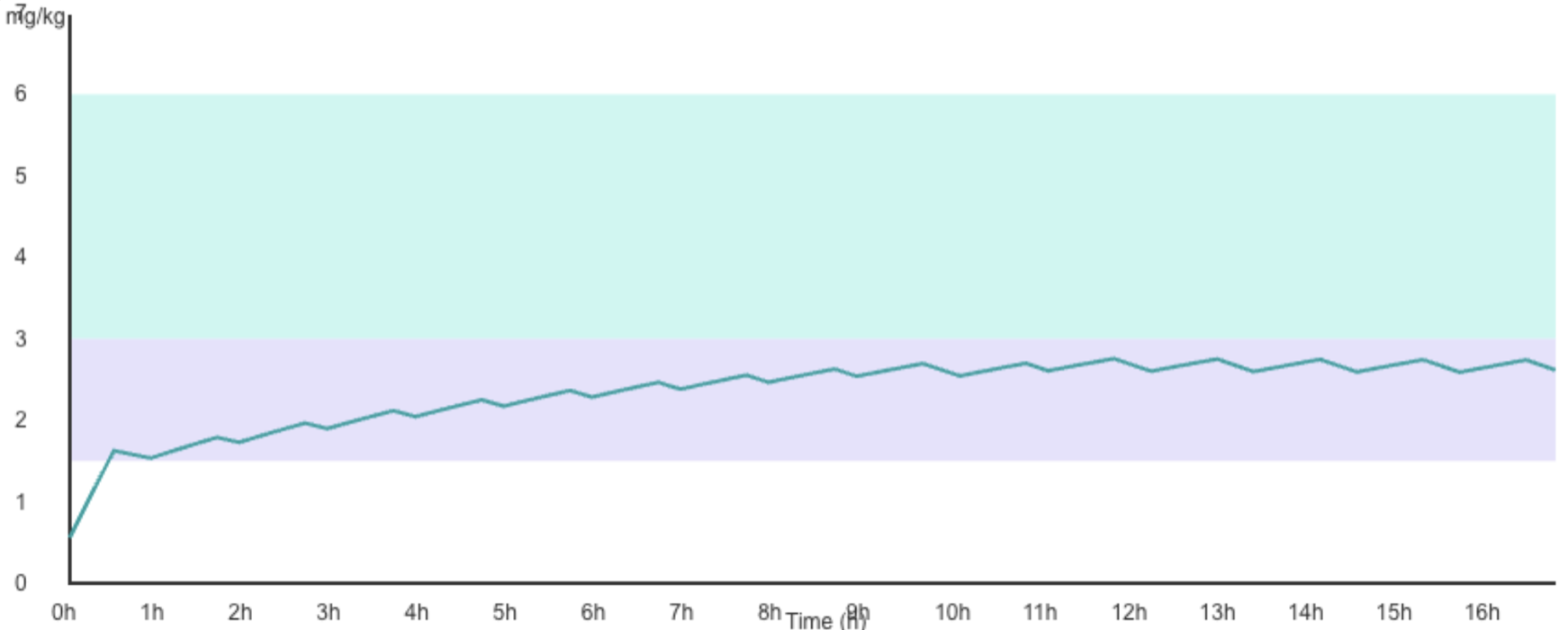
This is a 47kg runner consuming 380mg caffeine over 16hrs 50m. She stays in the low dose zone for the entire race and has a spare 20mg to take if the race is longer than expected.
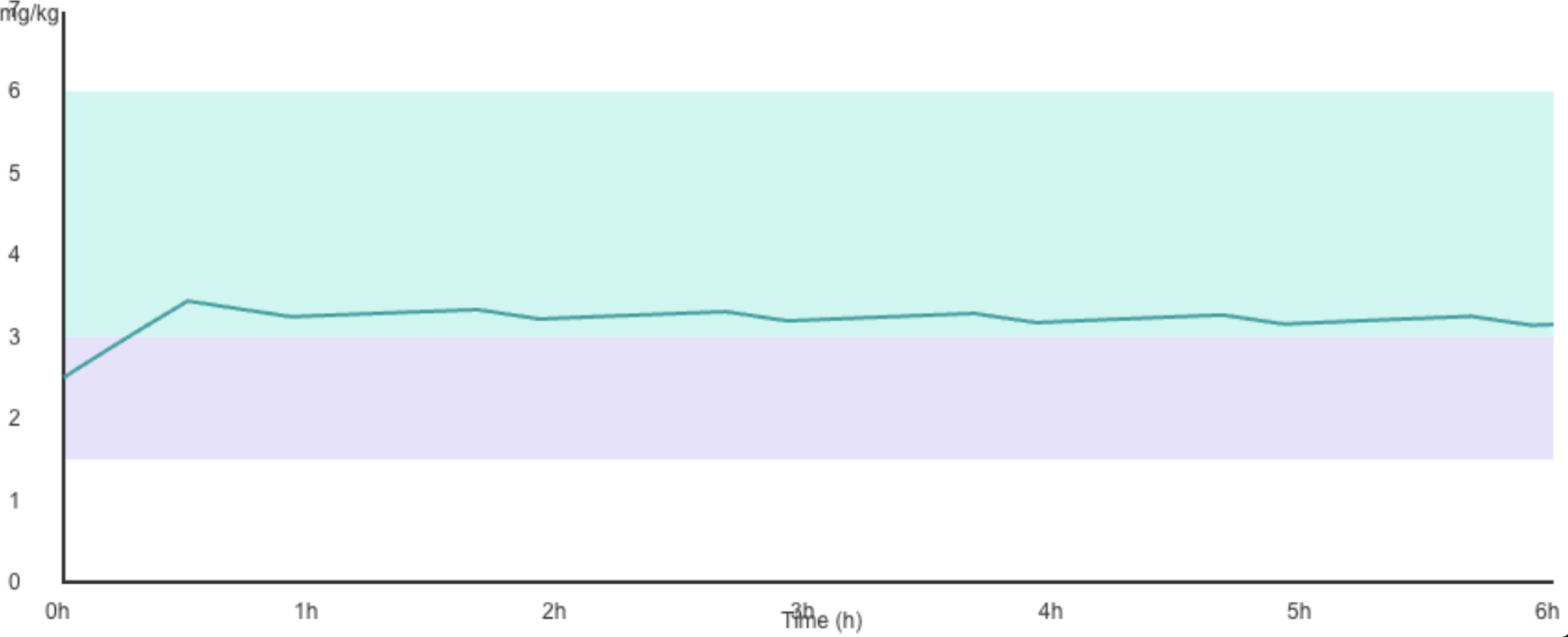
Here, the same 47kg runner pre doses before a 6 hour race and then tops up with 20mg doses every hour, for a total of 300mg.
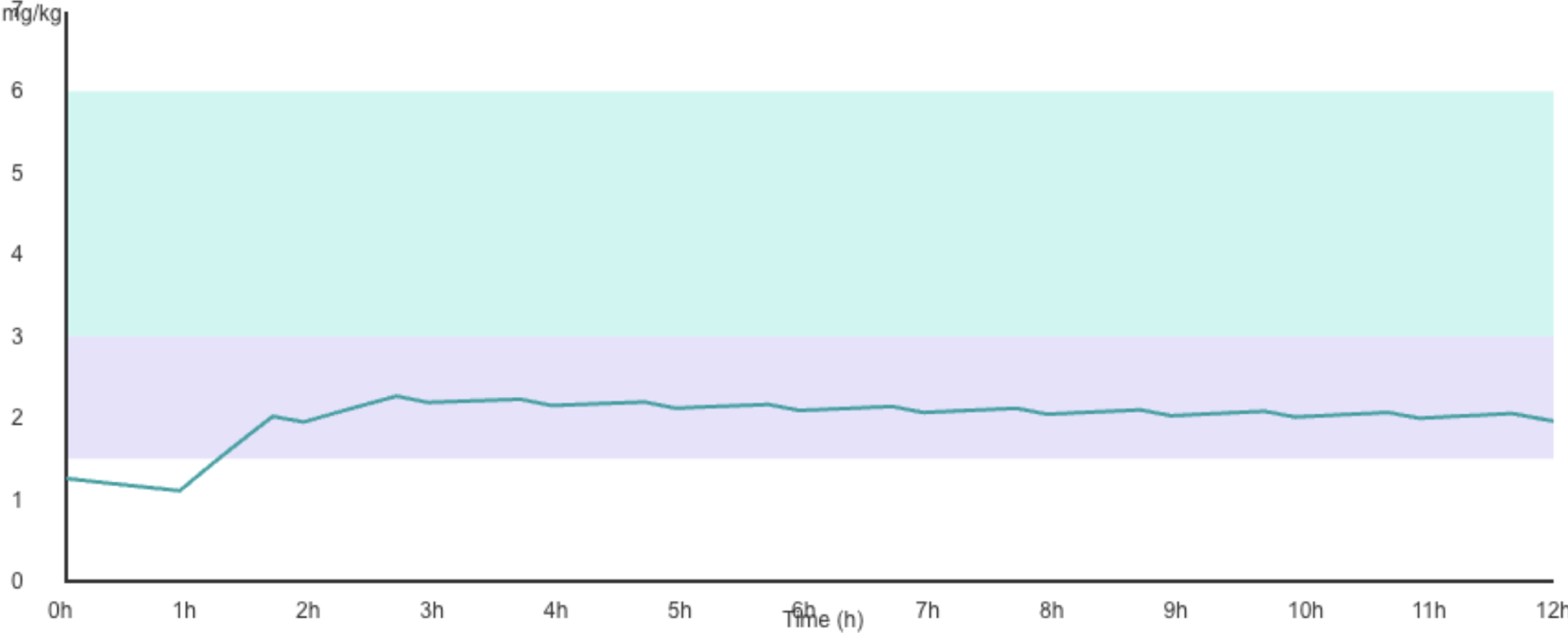
For heavier runners the target zone will be in the lower band. This is a 75kg runner in a 12-hour race consuming exactly 400mg (mostly in 20mg doses)
Caffeine strategy for shorter races
What this calculator shows is that you need to carefully dose your pre-race caffeine and then top up once early in the race.
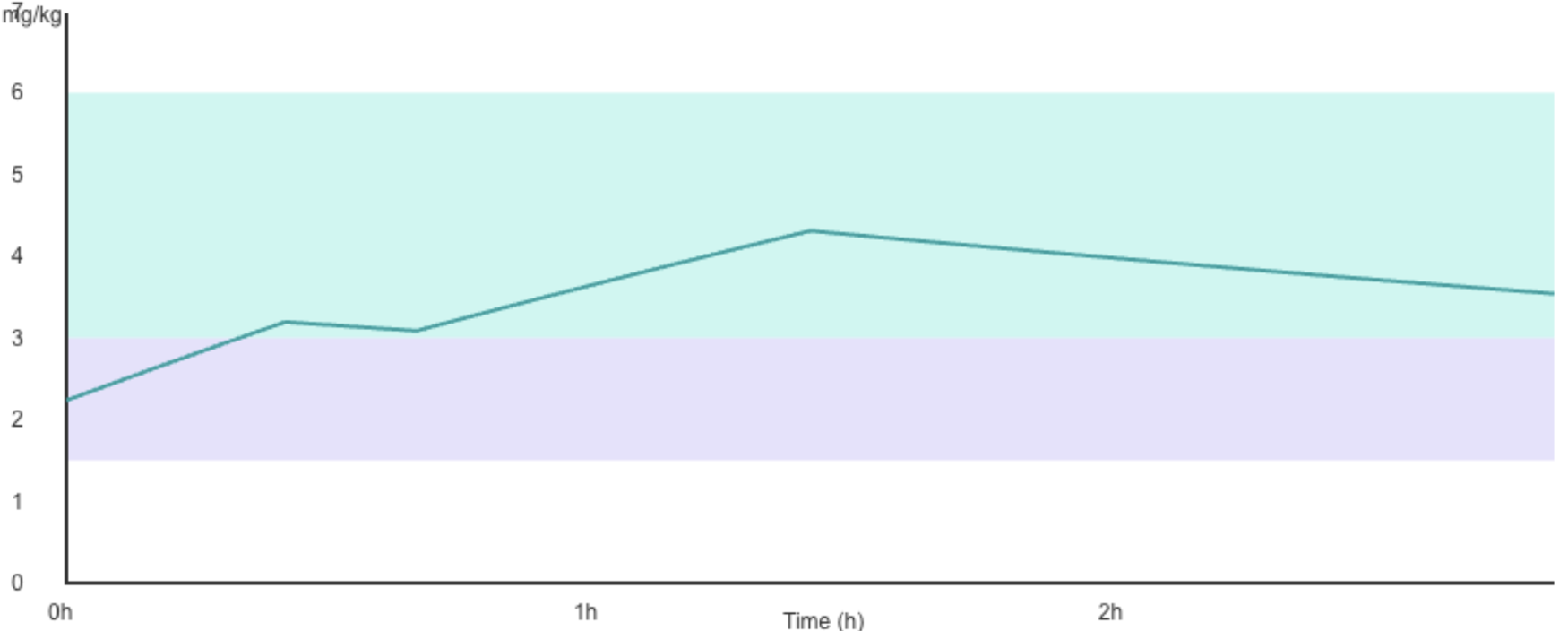
This example is for a 50kg athlete targeting a 2hr 50m marathon
The athlete has their usual morning coffee 90 minutes before the race start. 15 minutes before the start they take a 100mg caffeine gel. 45 minutes into the race they take a further 80mg of caffeine. The result is that they start the race in the lower band and gradually climb into the moderate band. This is good over the first kms when adrenaline can get the better of all of us. As the caffeine level starts to near 3mg/kg they take their only in-race dose and climb up to the middle of the 3-6mg/kg zone where they remains to the end of the race. In fact here they have a bit of time in hand in case their target time is elusive! We can also see that, assuming they consume no more caffeine, their caffeine levels will be at zero by bedtime.
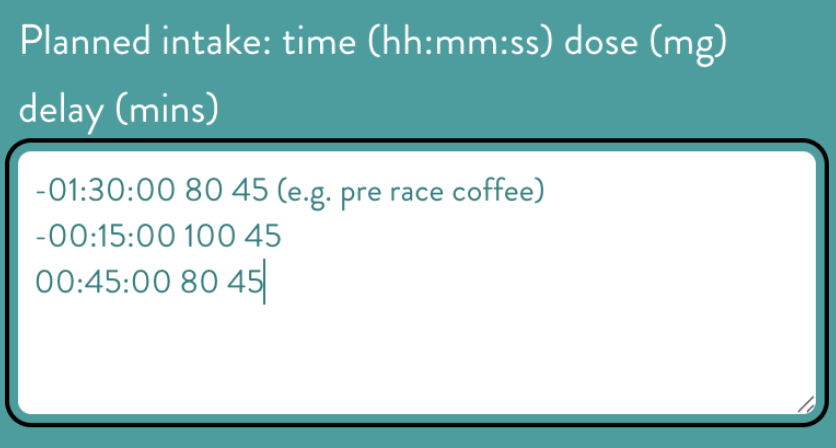
Pre-loading caffeine before a marathon. This shows how this is entered in the planning tool
This isn’t of course definitive. And the half-life of caffeine isn’t identical in everyone. So if you’re using the Ultra Potential caffeine planner you’ll need to bear that in mind. Make a race plan and start testing it on long runs, you’ll soon get a feel for what’s right for you. Overall my advice is to aim for the lowest effective dose. Don’t exceed 400mg in 24 hours. And obviously don’t use caffeine at all if a medical professional has told you to avoid it or it doesn’t feel good for you.
Should you reduce caffeine the week before your race?
It is not necessary to reduce caffeine in race week for performance, it doesn’t make any difference (Irwin et al., 2010). However if reducing caffeine lowers your pre-race anxiety it may be worth it.
How to use it
I’ve designed the caffeine planner so that you can see what your current plan looks like and then adjust it to stay in the zone/s you want.
The planned intake can start before the race. You should include anything you consume in the ~5 hrs before the race whether it’s your morning coffee or a caffeine gel. Use “-“ right before HH:MM:SS to fill in pre race caffeine. It’s important to include this otherwise the chart - and your plan - will be wildly inaccurate.
From the start of the race onwards use HH:MM:SS for the elapsed time in the race. On the same line add the mg of caffeine and then the number of minutes you expect it to take to reach peak concentrations (ballpark: 45 mins for gels/chews; 15 mins for strips). Start a new line for each additional dose.
Hit Plot Plan to see your chart. You will be asked to enter your email only once (you’ll have access to all the calculators on the page for free). After you’ve done that you can make as many edits as you like to your plan, just keep editing and then pressing Plot Plan to see how those changes affect it. Remember that your total caffeine intake shouldn’t exceed 400mg in 24 hours.
Want this level of detail applied to your training?
Caffeine strategy is one small piece of race preparation. If you want a coach who obsesses over the science and knows what it's like to race from 5k to +160km, I work with runners of all abilities.
Every plan comes with a pre-plan Zoom call, and I adjust your training weekly based on how it's actually going.
Find the caffeine planning tool here→
This isn’t a medical tool, or medical advice. Use at your own discretion and your own risk.
Select References
Gregory R. Cox, et al Effect of different protocols of caffeine intake on metabolism and endurance performance, Journal of Applied Physiology 2002 93:3, 990-999
Irwin, C., Desbrow, B., Ellis, A., O’Keeffe, B., Grant, G., & Leveritt, M. (2011). Caffeine withdrawal and high-intensity endurance cycling performance. Journal of Sports Sciences, 29(5), 509–515. https://doi.org/10.1080/02640414.2010.541480
Jenkins NT, Trilk JL, Singhal A, et al. Ergogenic effects of low doses of caffeine on cycling performance. Int J Sport Nutr Exerc Metab. 2008; 18:3 28–42.
Spriet, L.L. Exercise and Sport Performance with Low Doses of Caffeine. Sports Med 44 (Suppl 2), 175–184 (2014).
Talanian JL, Spriet LL. Low doses of caffeine late in exercise improve cycling time trial performance. FASEB J. 2007;21:107