West Highland Way 2026
It isn’t suffering, it’s an act of love
Finding your “why”
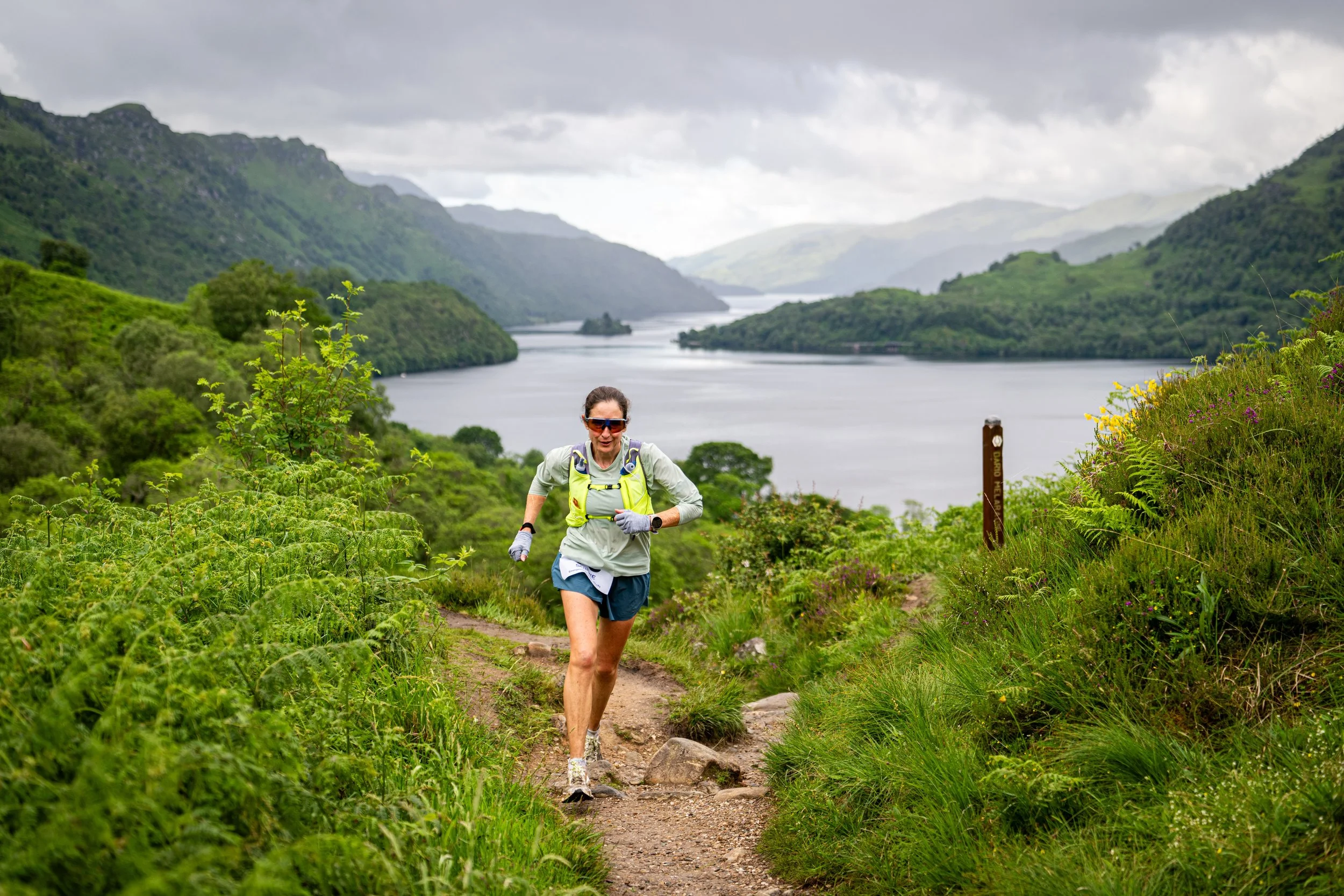
I think it’s useful, when preparing for a race like the West Highland Way to have a “why”. Articulate it before and prepare yourself to hold it in front of you like a carrot on a string when things get tough. My “why” was my Dad. One of my most treasured memories is him running towards me out of Lundavra in 2018 crying “you’re amazing!” Always on my side, always backing me, always there, until he wasn’t. People who have lost a parent - especially to something as cruel as cancer - will tell you the grief fades a little, but never really goes. This WHW was in his memory, an act of love.
Preparation (disruption!)
The West Highland Way had been my “A” race since entering but then the IAU announced a 100km World Champs in Spain and I decided to have a go at qualifying. Training was going really well - although I can’t say I was enjoying running long runs on the road - then the week before the Spanish 100km Champs I tore my hamstring. I was running on the rough pavings of Les Rotes and suddenly reached forward to miss an uneven paving, a smaller reach than I’ve made a million times on trail, but my brain didn’t get involved fast enough and the muscle left to its own devices tore. I cross trained, did twice daily rehab exercises and a few short jogs but it didn’t recover enough to do more than 20-minute jogs until 6 weeks before the race.
Constraints and adaptations, that’s basically what training is: what adaptations you need (mitochondrial, muscular…) and how you can maximise them within your personal constraints (time, health, terrain available…). I had 6 weeks, was pretty fit, still had some pace from my winter speed block, but lacked long trail runs. So the bulk of the next four weeks was building up the long runs with a bit of threshold training, some hill strides and bounds. Strength took a back seat as, at 44, I simply don’t recover fast enough to fit in 2 long runs, a quality session and strength every week. I still did mini sessions for maintenance. The second major constraint was that we were having a heat wave so pretty much every run was in the upper 20s or low 30s centigrade with very high humidity. What should have been my last long run was just awful, it was 34 degrees and my body was not managing to cool itself, I was walking even the slightest uphills. Then I got lucky - a forecast of heavy rain! So I got out for one extra 3 hour run in the rain. I finished feeling like I could do another few hours. That massively boosted my confidence (possibly over-boosted as I thought I could run over an hour faster than I eventually did…). I had started the year with three race wins in a row so hoped some of that form was still there.
Crew
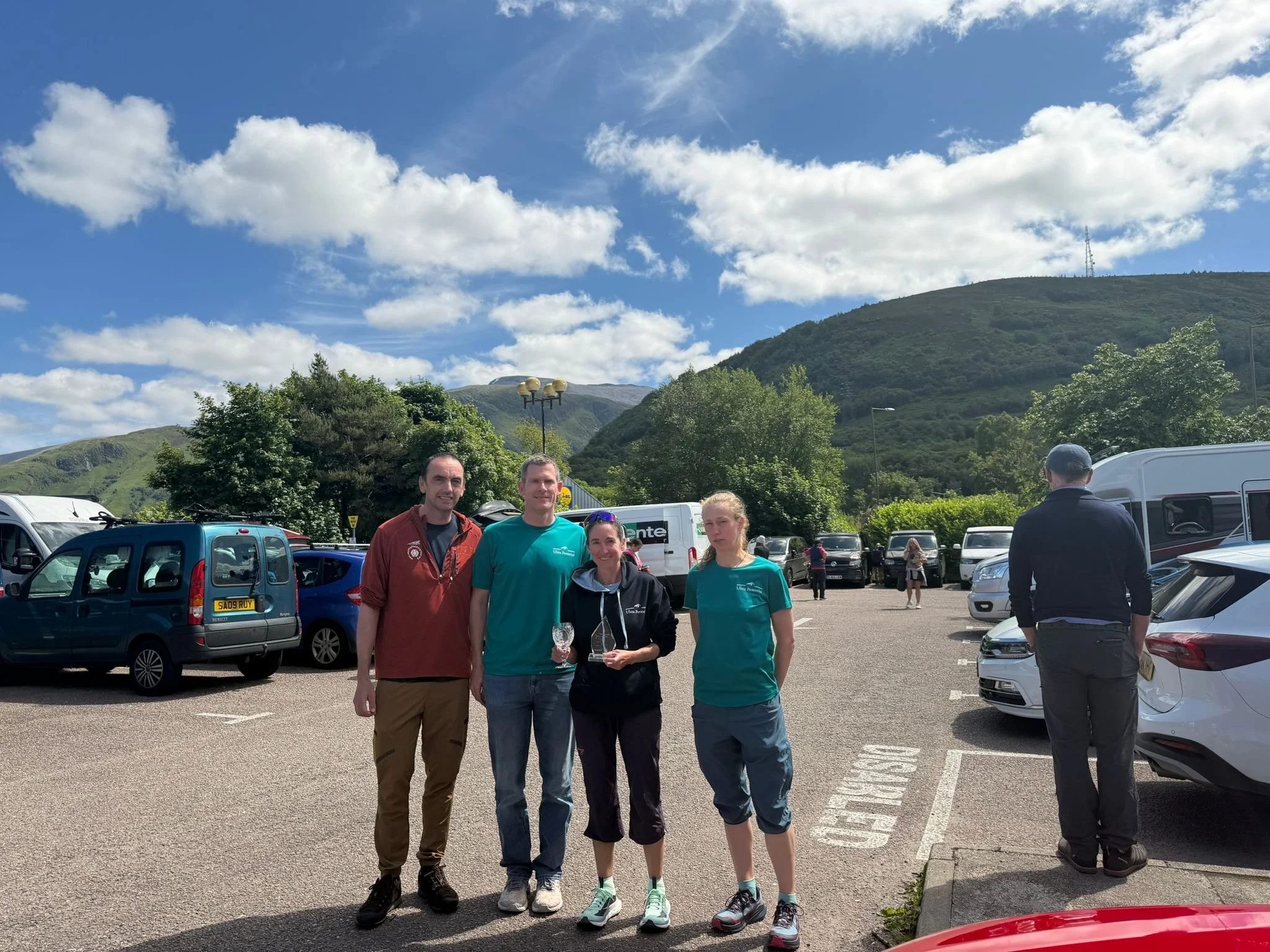
My friend Rachel Normand and two of my coached athletes - George Lupton and Paul Noble - had offered to crew and I had gratefully accepted. This turned out to be the dream team. Calmly positive and efficient throughout. Every checkpoint (except Glencoe where we did a shoe change) completed in seconds. Those brief seconds something to look forward to between checkpoints, fleeting moments of connection and support.
As I live in Spain we made do with a video call and used Google Drive to share the race plans. I also sent them a video demonstrating how to untie my shoe laces since I use a complicated heal lock, which isn’t intuitive to untie.
It’s a unique aspect of the West Highland Way that when you enter, people offer to crew. You don’t have to go begging! It makes the race so fair, every woman aiming for the podium does so with the same amount of support. I’ve done some big European races in the last few years where I’ve felt at a distinct disadvantage, like at Ultra Saint Jacques where I was the only woman on the podium without crew.
Race day
“Eddies in the space-time continuum.”
“Ah...is he. Is he.”
Time seemed to stretch and yawn then compress to nothing. You try to sleep but can’t. You try to work, or watch a film, or do a puzzle, but nothing holds your attention fully. This is the absolute worst part of racing. Living in my room in the Premier Inn for 2 days before the race probably didn’t help… It didn’t make for ideal taper eating either (mostly pre-packed vegan sushi and sachets of instant oats). I developed heartburn on race morning. I never get heartburn…
The nerves and anxiety didn’t dim until I was ensconced in Rachel’s van with my crew up by the race start drinking a can of Red Bull.
Milngavie to Drymen
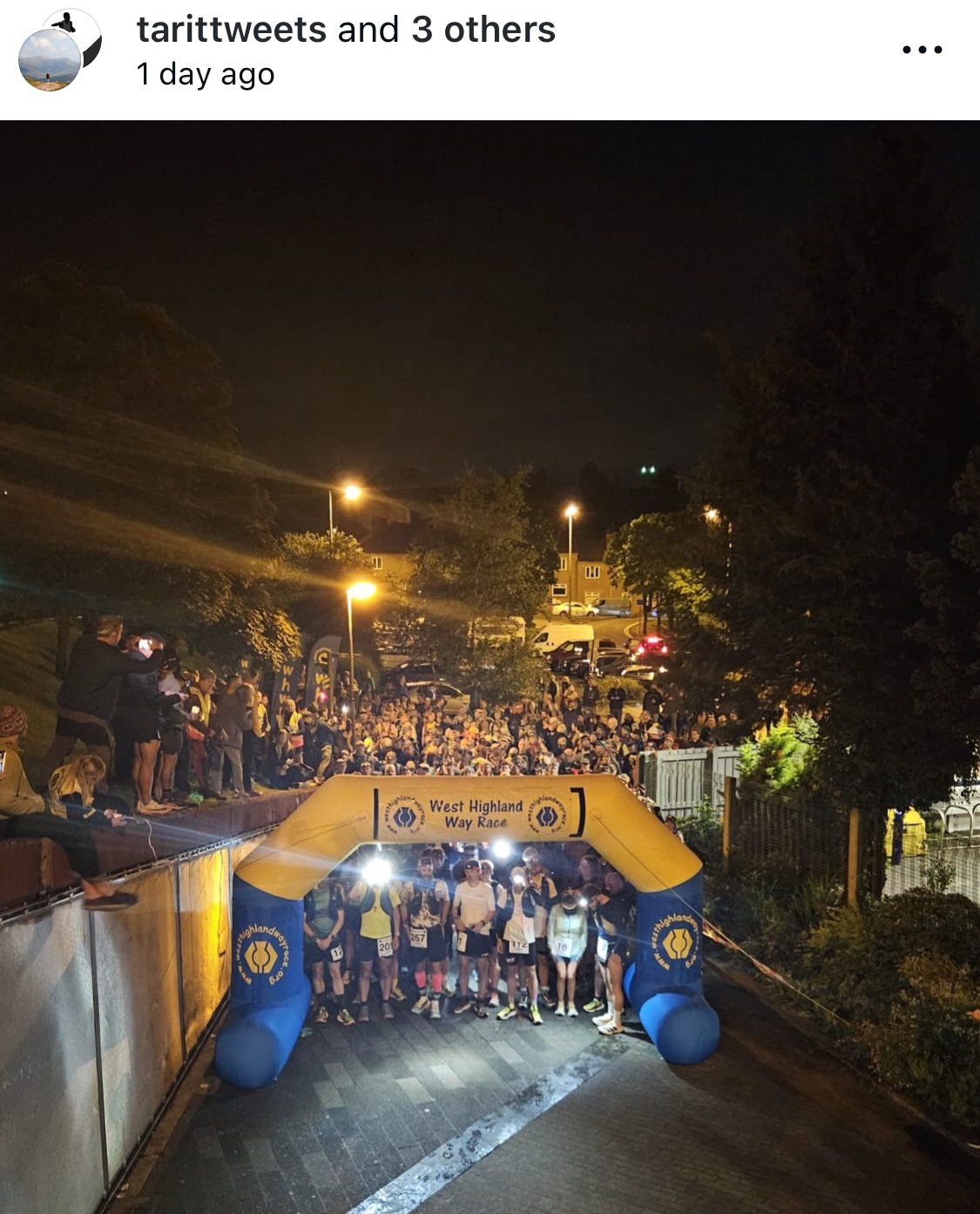
I love the start of the West Highland Way, the atmosphere is unique. No blaring music and bright lights, or chance of being mown down in the first km, just a few hundred friends setting out on an adventure. The first kms ticked off quickly, the ground becoming increasingly wet. Then:
Mud.
Mud.
Mud.
My muscles aren’t really conditioned to the micro adjustments you have to make on mud. We had some for 2 days in January but since then I’ve been running on hard packed soil and rocks. I was trying to avoid the worst without risking hurting myself. I felt a hip flexor pull. The road sections were nice and swift though and at Drymen we were diverted off route because of cows in the field. I knew that field could be extremely soggy so was secretly relieved (even though it added a bit of distance and elevation).
Conic Hill
A combination of pre-race nerves, travel and flimsy curtains meant I had accrued about 10 hours of sleep debt before the race, so for the first time I experienced drowsiness in a race. But as we began the first part of the climb up Conic the faintest glow began to squeeze itself between land and sky. Golds and pinks pouring light and life across a beautiful morning. The birds began to sing and chatter. I love the climb up Conic, almost as much as I hate the (new) downhill. I took the downhill extremely carefully, mindful of the low light and low wakefulness.
A quick bottle swap in Balmaha, dropped my main head torch and onwards. I had prepared for the fast flats and roller coaster hills by running around a vineyard: hundreds and hundreds of laps. This section felt great, the Adidas Terrex Ultras coming into their own, and of course my spring road miles were helpful here too.
The loch side
A little bit of loch side is nice, but I don’t think any of us have ever wished for more… especially when it was so slippery! The top of my foot had started hurting because I had to have my shoes tight (slippery…) but otherwise I was still moving okay. Since just after Drymen I had had the company of my Dad’s old iPod (we found it in his bedside table after he died), and was listening to his “mostly 60s” playlist on shuffle. It was bringing back a lot of memories. My Dad loved music. A couple of summers in the 90s the two of us drove from Hertfordshire to (and around) the Alps for his work, me selecting cassettes from his collection and both of us drumming along, him on the steering wheel, me on the dashboard. It’s hard to feel too tired when “Daddy Cool” comes on, and with it a flood of memories.
Bogle Glen to Tyndrum
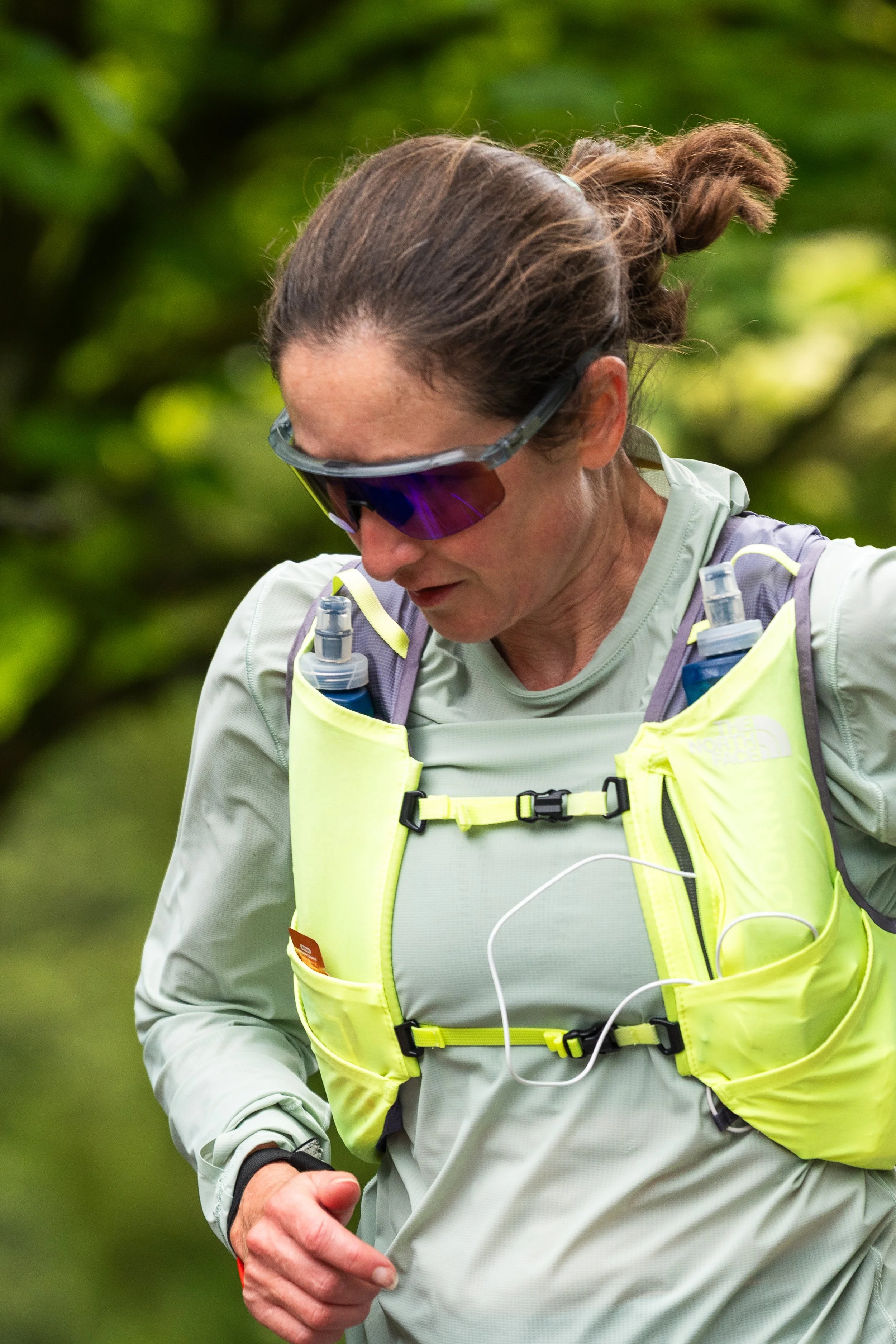
I was relieved to leave the loch side and start the climb towards Bogle Glen and with that the chance to see my crew again. The lack of miles in my legs was beginning to tell, and I was still slowing right up to cross any mud, not trusting my hip flexor. A group of American hikers went crazy when they saw me (having politely clapped the man ahead) so when I heard them go crazy a few minutes later I knew that I was going to be caught. I was philosophical about it. 95 miles is a long way to run off 6 weeks’ run training! The only question was, who? Roberta Fletcher came alongside me and I congratulated her on her great run. We fell into step for a few minutes before she pulled ahead (her going through puddles I was still doggedly going around). She looked really good and was clearly going to have a great day.
After the gate at Glen Bogle I met my team and got fresh bottles. The downhill had started to get a bit clunky by now and I wasn’t enjoying it so much. From the A82 the trail drags slowly uphill, I dislike this section, it’s that kind of flat climbing that messes with your head. By Tyndrum I was feeling sorry for myself and told George I was feeling awful. He chose not to share that with the rest of the crew (or my Mum!). Fortunately these down moments were easily challenged with the mantra “this isn’t suffering, it’s an act of love.”
Tyndrum
There was lots of cheering through Tyndrum, including old friends I hadn’t seen in years then on up the wide track. There were several highland coos standing right on the edge of the track. I thought they looked pretty confident - they normally stand a little way off. I greeted them “hello girls!” Then as I reached the last one I saw the source of their confidence. The largest highland bull I had ever seen. If he could have raised a nonchalant eyebrow he would have. “Sorry, sir! I’ll just cross over, I’m just a tiny little human, nothing to concern you…” Well that explained why the ladies were so chill.
The pain in my foot was building, a kind of burning, electrical pain. I would need to change my shoes. Glencoe seemed a good choice.
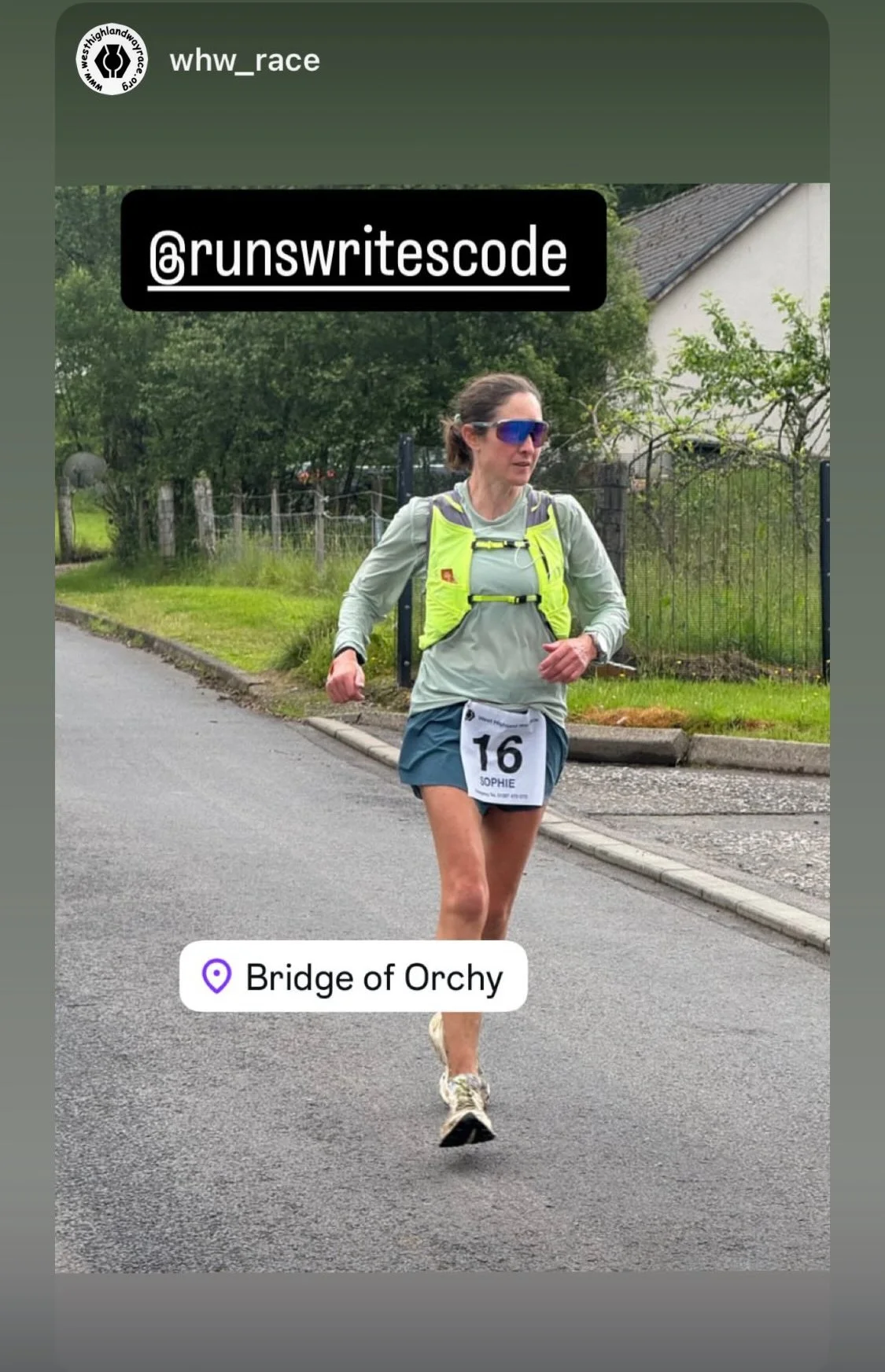
Bridge of Orchy
I handed over my Dad’s iPod and took my Mighty, the battery of which died within 20 minutes.
I didn’t run the next section well. The lack of miles was an issue but so was the lack of sleep. I wasn’t drowsy but my brain was tired. Whilst mental (psychological) strength is important, a sometimes overlooked aspect of ultra running is brain endurance: the ability of the brain to resist fatigue. It’s trainable, and I will definitely be putting more work into it! The body and brain are not separate entities, the brain can “touch” every muscle fibre, every motoneuron… every movement we make originates in the brain and there is constant feedback in both directions. The body sending sensory feedback, the brain processing and instructing. A tired brain is then making calls about resources versus distance remaining, and underestimating your physical capacity. This is a long way of saying: I slowed right down on Rannoch Moor because my brain was out to lunch.
Glencoe
Coming in to Glencoe I saw the little dog that I had been greeting and petting at checkpoints since the start line and s/he woofed to see me. Then I saw David who was crewing one of my coached athletes, Scott. I guessed this meant he was running well (he finished sub-24!).
Time for the shoe change that should have happened at Tyndrum… the pain on the top of my foot was occasionally hitting 7/10.
My crew were ready with seat, shoes, socks, towels, anti-friction stick and set to work. I was glad I had sent them the video explaining how to untie my heel locked laces! They were lightning quick and before long I was trotting down the road in comfy Hokas. Maybe I should have started in the Hokas? They would certainly have been the best choice from Rowardennan (but who wants to take their shoes off in Midgie Central?
I finished off a can of Red Bull to try to get my brain back in the game. My caffeine strategy had been tied to gels, which I hadn’t been able to stomach after the first 4/5 hours.
At the Devil’s Staircase I collected fresh bottles and then enjoyed the hike, turning occasionally to look at the rich, rolling majesty of Glencoe. I spent most of the climb wishing I had some water as my pre-mixed drinks were beginning to feel too strong. I was delighted to find volunteers at the top and get some water. Thank you!
I enjoyed the first part of the trail down, but spent the final part worrying I was going to miss a turning. Unlike in 2018 my quads were absolutely fine on this downhill. The last few years I’ve taken to deliberately inducing DOMS two weeks before ultras to benefit from the repeated bout effect. There’s a mountain about 40 minutes from home with a 30-40% incline, it’s a great way to start a taper…
Kinlochleven
Another of my coached athletes, Patricia, was on medic duty at Kinlochleven, it was nice to see her, but not to need her…
Again my crew did a quick change over, more Red Bull, and then George made me run out of the aid station - it’s hard to get running here after coming down the long descent. But I quite enjoyed the climb out and made decent progress.
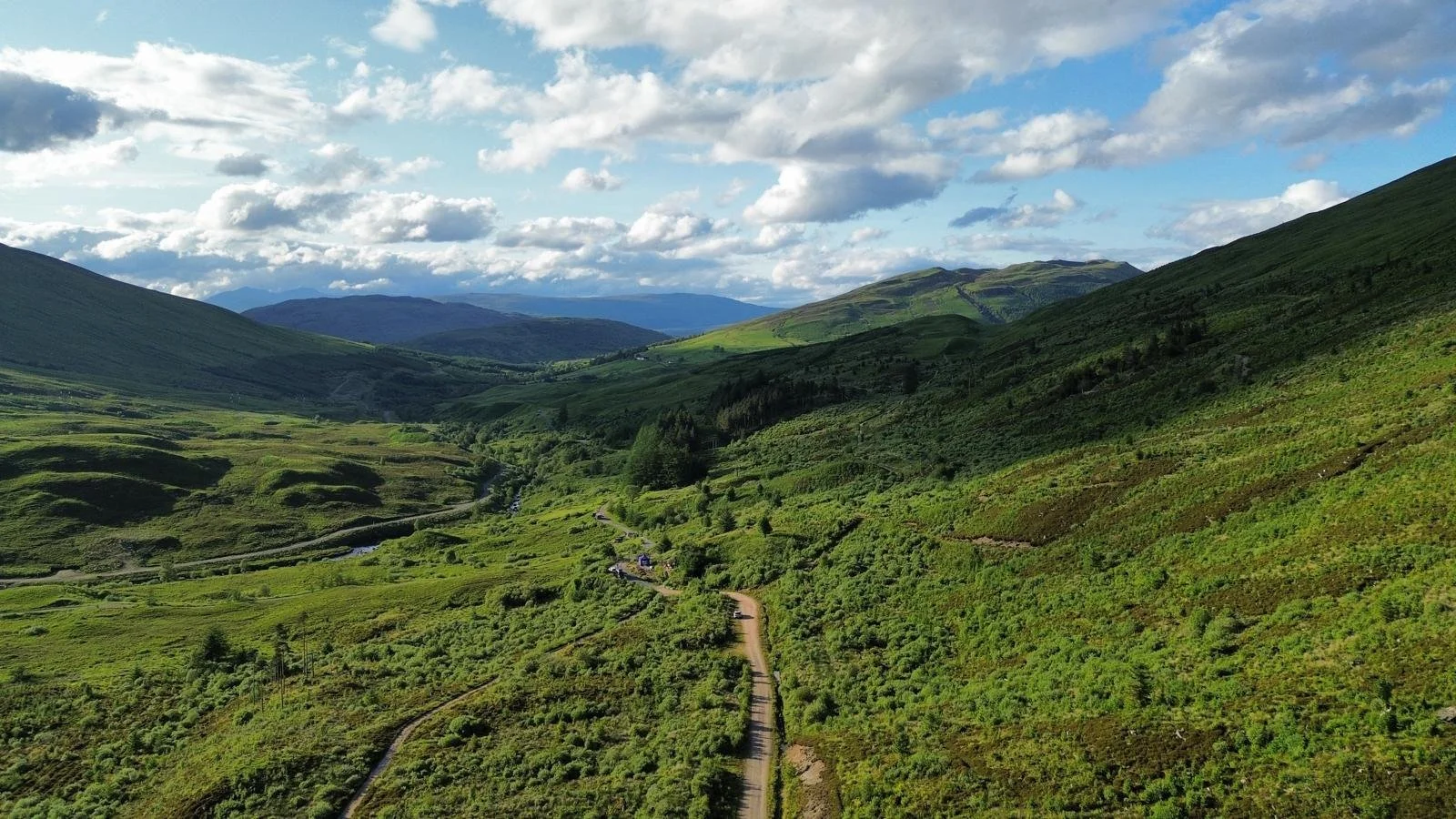
Once at the top however my fatigued brain went back to “very much not helping” mode. Ten minutes felt like thirty, kms passed sluggishly and I had to keep reminding myself that I was perfectly capable of running. Every stream crossing felt like a Mensa puzzle. Just keep moving! Bizarrely I was finding it easier to run uphill than on the flat. My legs were tired but not stiff or sore. Just. Keep. Moving.
After approximately five years alone in the wilderness I arrived at Lundavra. I mentally high-fived the ghost of my father. My wonderful, generous super crew were there for the final restock of fuel and morale. The single track seemed to be something my brain liked and I found a bit more momentum. About a km out of Lundavra my watch battery died. This made the whole time weirdness a bit harder, and I became quite anxious about taking a wrong turn.
One final small climb and I emerged onto the fire track, took a right and headed down. The lack of watch directions was very disconcerting. I was pleased when I passed some wild campers as their cheering suggested they had seen other runners earlier. All the way down I lied to myself about how many kms were left. I knew to turn left for Braveheart but was very grateful for the flour arrows. As I neared Braveheart there were supporters and I felt a bit more secure. Finally the tarmac under my feet. Smelling the stable, my brain finally accepted that there were resources to spare and I picked up the pace. It felt like flying. I was glad I had used Google Street View to refresh the entry into Fort William and learn the route for the new finish. I did ask someone if I was heading for the station though, just to be sure!
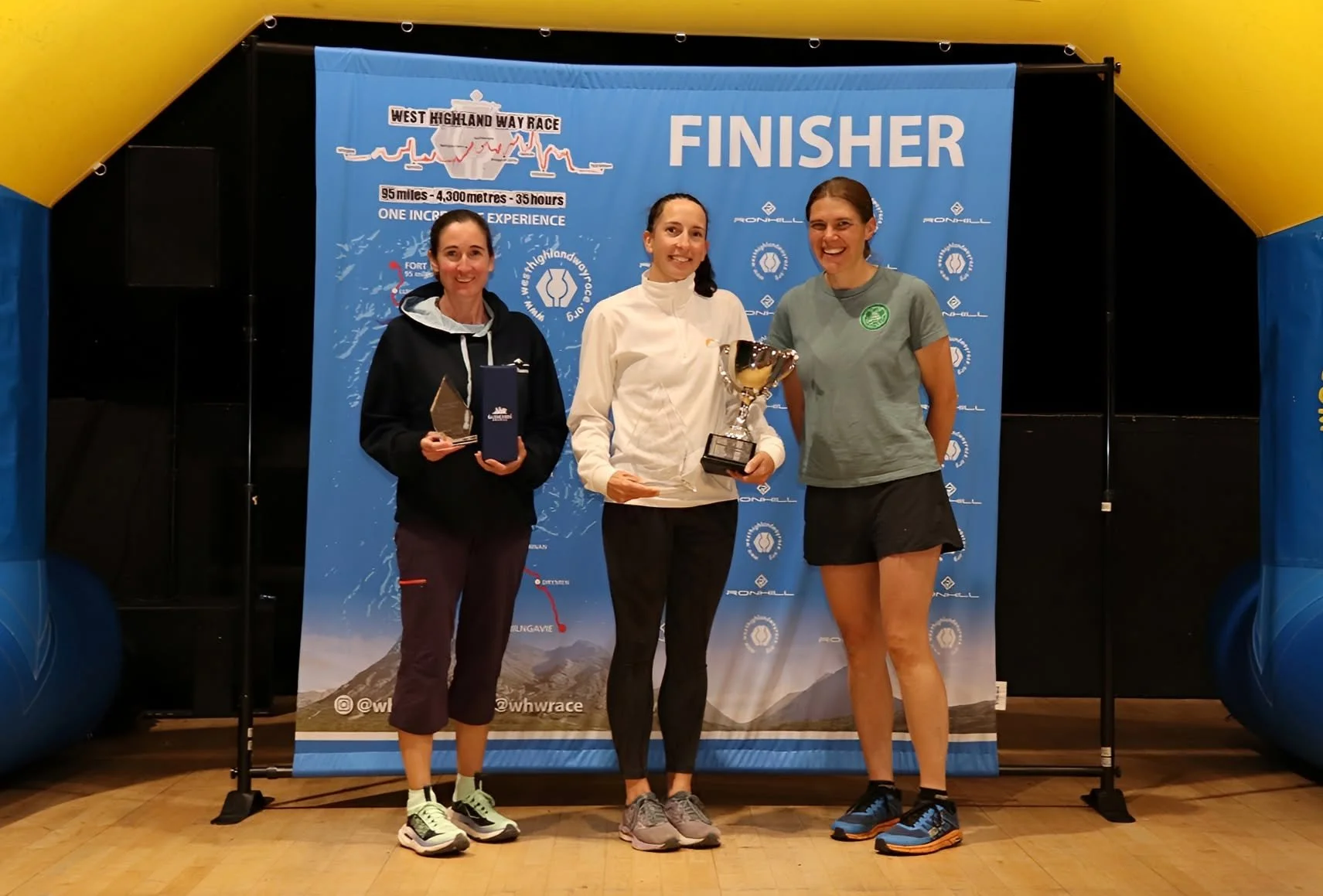
Gratitude. Happiness. Relief.
Second woman, 19th overall.
For my family, and friends, my crew, the athletes I coach, all the dogs I’ve ever petted, for the volunteers - and for running.
This isn’t suffering, it’s an act of love.
Want to join the Ultra Potential Trail Running Team? Check here to see if there’s availability → I want in!